Monday, November 24, 2014

Learn The History Of The Other Kellogg

by Zinta Aistars
for WMUK 102.1 FM
Southwest Michigan's NPR affiliate


W.K. Kellogg is best known for his breakfast cereals, but his brother, Dr. John Harvey Kellogg, is better known for running the Battle Creek Sanitarium and his seemingly radical religious beliefs.
Kellogg was a Seventh-Day Adventist—a protestant denomination that focuses on the second coming of Jesus Christ as well as the idea of "biologic living." 
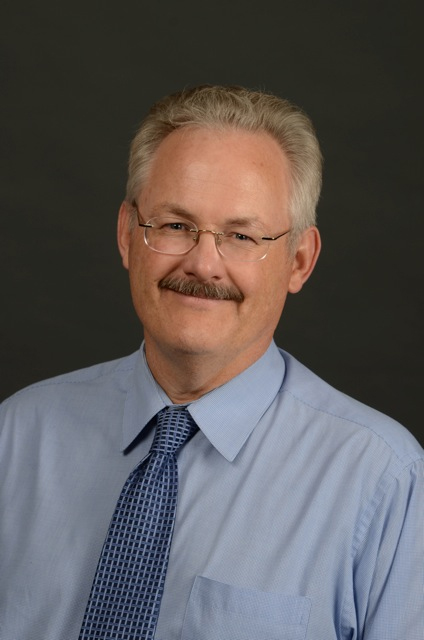
WMU Professor and author Brian C. Wilson
Brian C. Wilson is the author of Dr. John Harvey Kellogg and the Religion of Biologic Living. Wilson is doing several readings in the Southwest Michigan area.
The first is Tuesday night at Schuler Books in Grand Rapids at 6:30 p.m. Wilson will also be at Kazoo Books on Parkview on December 6th and at the Battle Creek Barnes & Noble on December 7th at 1 p.m.
Wilson says "biologic living" has to do with the Adventist belief that aside from the commandments, God also created a series of physical laws that humans were to follow.
Kellogg believed that it was just as important to take care of one's body as it was to nurture the soul. 
Adam And Eve Were Vegan
Kellogg's reasons for being a vegan relate to very early Bible texts, says Wilson. This was a very common believe of Adventists in Kellogg's time. 
"The argument was that human beings only began to eat flesh after the flood because of the dearth of vegetable foods. Now one of the interesting things is, if you read the Bible you see that the patriarchs of those times had tremendously long life spans - like Methuselah, thousands of years. But after Noah and his kin began eating flesh, you see a degeneration of the human race and so the life spans grow shorter and shorter and shorter."
Life At The Sanitarium
Wilson says the Victorian building housed hundreds of people with different rooms for things like hydropathy, gymnastics, heating and light treatments, tennis courts, sandboxes for kids. 
"There was a palm garden in the middle which go and basically...they wouldn't have high tea because there was no tea there, but they would have a tea substitute and essentially listen to a string quartet play for a while," Wilson explains. "There were dances occasionally. It had kind of the atmosphere of a kind of posh European hotel."
Eugenics And The Dark Side Of Dr. Kellogg
Possibly the most awkward part of Wilson's book talks about Kellogg's view toward ...


Thursday, November 20, 2014

Starting a conversation about keeping babies alive

by Zinta Aistars
Published in Southwest Michigan's Second Wave Media
November 20, 2014


Grace Lubwama (Photos by Susan Andress)


Why is the infant mortality rate for black babies higher than those of white babies in Kalamazoo? Grace Lubwama, the new chief executive officer at Kalamazoo's YWCA will be working on bringing those numbers down.


Grace Lubwama, the new chief executive officer at Kalamazoo’s YWCA, was eager to see the United States when she arrived in 1997 as a young student from Uganda. This was the land of milk and honey, after all.

"When I first landed here, I thought I would be walking on gold, with lights everywhere," Lubwama laughs. 

Along with the stunning New York City skyline, Lubwama also saw such poverty in areas of New York City, her first stop, that poverty in Uganda at times paled in comparison. Infant mortality rates, she would later learn, were even higher in areas of the United States than in her homeland. She saw people living on the streets and going hungry. 

Although Lubwama bachelor’s degree was in art and design, the young student realized her calling was elsewhere. Lubwama knew she could make a difference in the social and public health issues she saw in such profusion around her. 

When coming to the United States, Lubwama had intended to return to Uganda upon completing her education. She received her master’s degree in public health at Boston University and her doctoral degree in policy, planning and development at the University of Southern California. Instead of returning to her homeland, however, she rolled up her sleeves to work on changing the world in which she now lived.

By then married and with two small sons, Lubwama learned about the infant mortality rates in Los Angeles, California, where, prior to coming to Kalamazoo’s YWCA in February 2014, she was the executive director of Antelope Valley Partners for Health, a public health planning and intervention organization, and national director of World Vision US, a Christian humanitarian organization working with children, families and communities, to take on the root causes of poverty and injustice. 

"When I moved to L.A., I wanted to do something to improve the wellness of community," Lubwama says. "I learned that the infant mortality rate in L.A. was 32.7 percent. That’s higher than in Uganda, and I was struck by that."

Lubwama started an important conversation. "I was young and naïve, but I had lots of enthusiasm. I talked to everyone I could talk to at hospitals and all kinds of organizations. We created a community collaborative, assessed the needs of the community, mapped resources, and came up with a strategy."

It took time, but it worked. After about 10 years, 32.7 percent dropped to 9 percent infant mortality rate. 

The YWCA in Kalamazoo noticed. Lubwama was hired to ...

READ THE COMPLETE ARTICLE AT SECOND WAVE.


Sunday, November 16, 2014

BRAIN Lab: Putting scholarship and hearts in the right place

by Zinta Aistars
Published in Southwest Michigan's Second Wave Media
November 13, 2014


Ed Roth demonstrates a music therapy device (Photo by Susan Andress)

Together experts in occupational therapy, psychology, social work, exercise physiology, neuroscience, biological sciences, and medicine neurology and music therapy are learning how music can help those with neurological disorders. 

The opiates the young mother used during pregnancy passed through the umbilical cord to her baby. Now that her baby is born, she does not know how to soothe or sing a lullaby to her crying child.

A group of children, exposed early in life to trauma, are unable to express their emotions—until they learn to use music to do so. Music becomes their language, their key to empathy for others. 

A group of graduate students sing from sheet music, then sing again by improvising. The level of oxytocin in their brains, a hormone that facilitates bonding with others, appears to rise dramatically when the singers improvise and even more when they sing together.

These are just some of the research projects currently underway in the BRAIN lab at Western Michigan University. The Laboratory for Brain Research And Interdisciplinary Neurosciences, or BRAIN, is an interdisciplinary research center founded in 2011 by Ed Roth, a music therapy professor, to pursue primarily translational and clinical research using various neuroscience-driven methodologies.

"It was an idea three, four years in the making," Roth says. "It began with team building, getting a team together of people who had the scholarship we needed and also their hearts in the right place."

Holding meetings every other week or so, Roth brought to the table experts in occupational therapy, psychology, social work, exercise physiology, neuroscience, biological sciences, and medicine neurology, adding his own expertise in music therapy.

"We weren’t the traditional lab in that ...

READ THE COMPLETE ARTICLE AT SECOND WAVE.