Tuesday, February 14, 2017

Between the Lines: Sleeping Tiger Awakes

by Zinta Aistars

for WMUK 102.1 FM
Southwest Michigan's NPR affiliate


Between the Lines is my weekly radio show about books and writers with a Michigan connection. It airs every Tuesday at 7:50 a.m., 11:55 a.m., and 4:20 p.m. (or listen anytime online), on WMUK 102.1 FM, Southwest Michigan's NPR affiliate. I am the host of Between the Lines.

This week's guest: Dr. Anne Marie Ameri

Martha Obermiller of Denver, right, chants during a rally protesting the immigration policies of President Donald Trump, near the White House in Washington, Saturday, Feb. 4, 2017
CREDIT MANUEL BALCE CENETA / AP PHOTO


What does the average American really know about Muslims and the religion of Islam? For all that we hear in the news every day, misperceptions abound. But a Michigan writer hopes to change that.


According to a 2015 report by the Pew Research Center, Islam is the second largest religion after Christianity, with 1.6 billion Muslims around the world. Approximately 3.5 million of them live in the United States. Muslims are the majority in 49 countries.
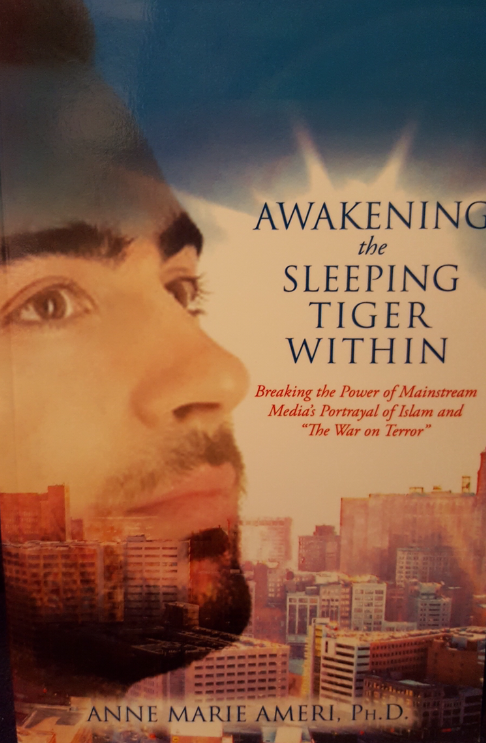
Anne Marie Ameri of Dearborn felt she had to write Awakening the Sleeping Tiger Within: Breaking the Power of Mainstream Media’s Portrayal of Islam and The War on Terrorism (2016) to address misperceptions.
“I couldn’t sit back and do nothing,” Ameri says. “There was biased and inaccurate reporting by those who are not Muslim and had their own agenda, telling us what Muslims believe, making up things like if you kill a person, you will be rewarded with 72 virgins in heaven. Actually, what our holy book says is that if you kill one person, it’s as if you have killed all of humanity.”
Ameri studied history and psychology at Henry Ford College and Eastern Michigan University before earning her doctoral degree at Wayne State University. She also studied law at the University of Detroit-Mercy.
CREDIT ANNE MARIE AMERI
Ameri decided to apply her research skills to writing the book, and to develop strategies for overcoming misinformation about Islam. She says people should stay informed using a diverse selection of media to get an overall picture. That way, Ameri says they will be better able to separate what is true from politically motivated propaganda.
Ameri says demonstrations around the country protesting the Trump administration's recent executive order banning immigration from seven predominantly Muslim countries have been ...


Monday, January 30, 2017

Between the Lines: Writing Through Cancer

by Zinta Aistars

for WMUK 102.1 FM
Southwest Michigan's NPR affiliate


Between the Lines is my weekly radio show about books and writers with a Michigan connection. It airs every Tuesday at 7:50 a.m., 11:55 a.m., and 4:20 p.m. (or listen anytime online), on WMUK 102.1 FM, Southwest Michigan's NPR affiliate. I am the host of Between the Lines.

This week's guest: Fleda Brown

Fleda Brown
CREDIT FLEDA BROWN


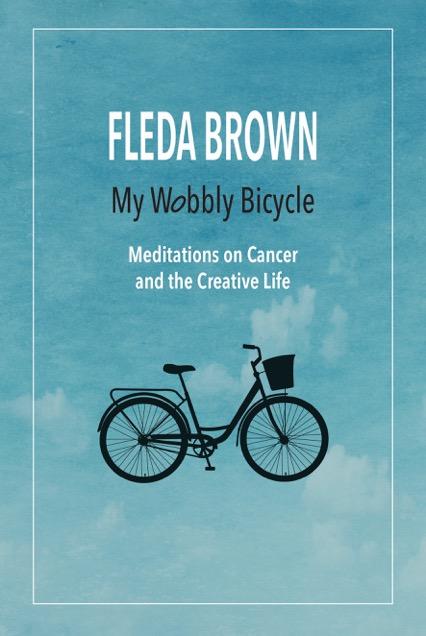
Fleda Brown is a cancer survivor. Being a writer, she wrote her way through her illness and found that doing so gave her the strength and courage to get her through the journey back to wellness. Her book is called My Wobbly Bicycle: Meditations on Cancer and the Creative Life (Mission Point Press, 2016).

Brown’s tenth book, a collection of poetry called The Woods are on Fire: New and Selected Poems (University of Nebraska Press, 2017), is due out in March, and most of Brown’s published work is poetry. She was Delaware's poet laureate from 2001 to 2007. But Brown's ordeal with cancer turned her toward prose.
Brown says writing about her cancer treatment as it happened, “Was a pretty darn important part of the treatment. I write all the time anyway, and I had a blog that I had started almost a year before the diagnosis. It had been mostly about writing. I didn’t write about the cancer at first, but after surgery, I decided it was so much the center of my life then that I might as well.”
The blog gained many followers and Brown turned her posts there into the memoir, My Wobbly Bicycle. She found that writing about her treatment helped her cope. She described her experiences with chemotherapy and radiation therapy; dealing with hair loss; and the fears and hopes that rose along with a new realization of her own mortality. And she described her recovery.
CREDIT MISSION POINT PRESS
“This became my most important writing,” Brown says. “I would lie in bed at night thinking about how I wanted to word something.”
As a part of her experience as a cancer survivor, Brown says she ...


Monday, January 23, 2017

Between the Lines: Joseph Gross, Poet

by Zinta Aistars

for WMUK 102.1 FM
Southwest Michigan's NPR affiliate


Between the Lines is my weekly radio show about books and writers with a Michigan connection. It airs every Tuesday at 7:50 a.m., 11:55 a.m., and 4:20 p.m. (or listen anytime online), on WMUK 102.1 FM, Southwest Michigan's NPR affiliate. I am the host of Between the Lines.

This week's guest: Joseph Gross


Joseph Gross
CREDIT ANGELA GROSS


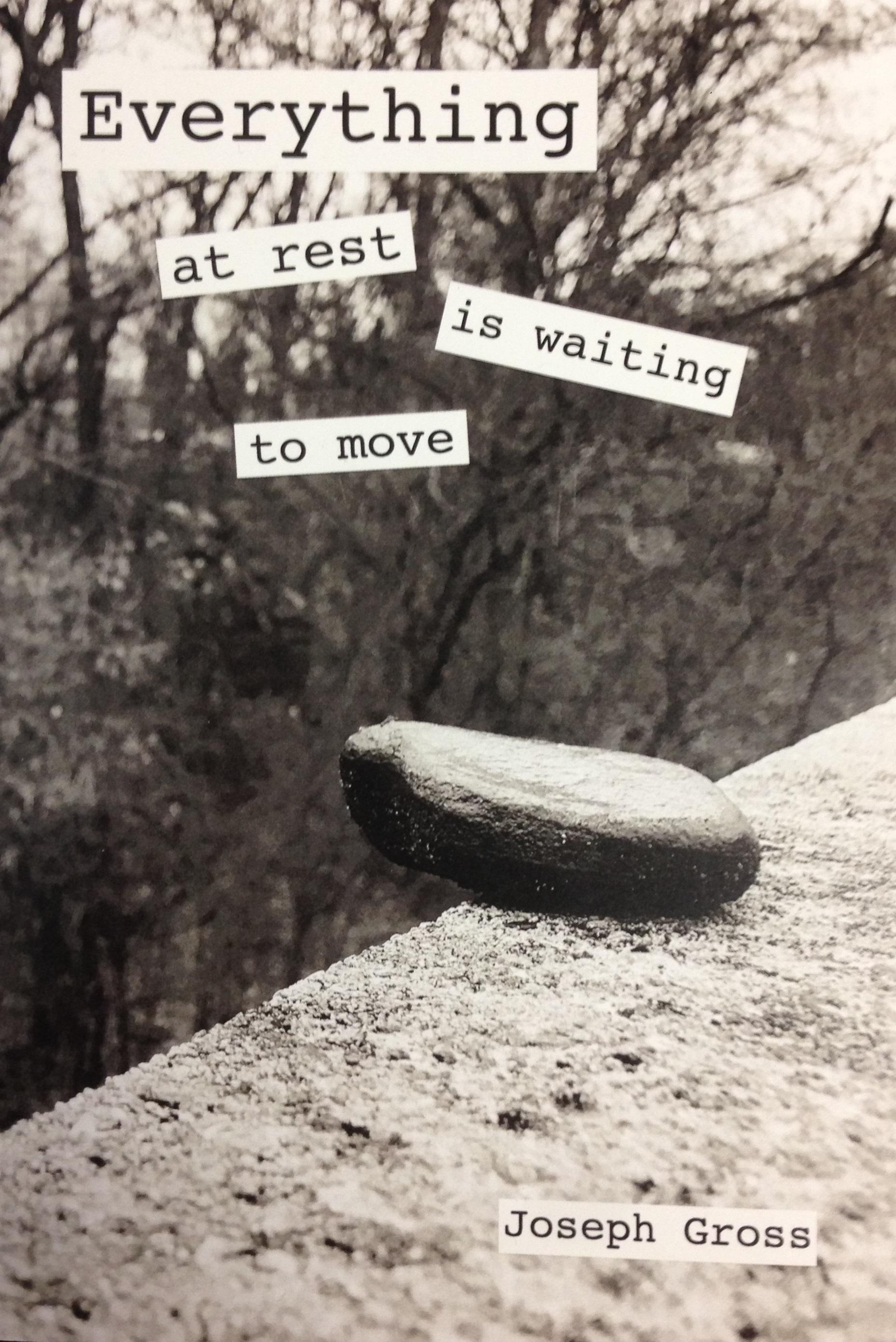
Joseph Gross is the director of the Ransom District Library in Plainwell, where the kids call him “Mr. Joe.” But he’s also a poet and his first poetry collection, Everything at Rest is Waiting to Move, was recently published by Celery City Chapbooks.

“These are poems culled from the last five years or so,” Gross says. “As I put them together, I found a theme of change…Many of them were inspired by a class I took at Western for my MFA, with Bill Olsen."
Gross says Olsen helped him focus on poetry as he studied creative nonfiction at Loyola University with Dean Young before coming to Western Michigan University. Gross's stories, essays, and poems have appeared in a variety of national journals, including the Alaska Quarterly ReviewFourth Genre, the Mid-American Review, and Redivider.
Gross worked as editor-in-chief at Atticus Review for some years. His approach to poetry then was not necessarily how well he understood a particular poem as to how deeply it moved him.
CREDIT CELERY CITY CHAPBOOKS
“There are poems that I’ve admired without necessarily being moved,” Gross says. “I tend to like poetry in which I can find my bearing rather than something that is so abstract that it’s difficult to find an entry point. That can be almost embarrassing to admit, but I can also say that I’ve been moved by poems that I can’t say I totally understood.”
Gross acknowledges that many people are intimidated by poetry, especially those more abstract and dense works that can be challenging to understand.
“Sometimes you have to ..."


Tuesday, January 17, 2017

Between the Lines: Kalamazoo Coloring Book

by Zinta Aistars

for WMUK 102.1 FM
Southwest Michigan's NPR affiliate


Between the Lines is my weekly radio show about books and writers with a Michigan connection. It airs every Tuesday at 7:50 a.m., 11:55 a.m., and 4:20 p.m. (or listen anytime online), on WMUK 102.1 FM, Southwest Michigan's NPR affiliate. I am the host of Between the Lines.

This week's guest: Simon Kalil Borst


You’ve seen his work. It's in the online Kalamazoo magazine Southwest Michigan's Second WaveYou might also have spotted it in the People’s Food Co-op's newsletter. Or maybe you've seen his work on the walls of Brakeman Design during an Art Hop. Simon Kalil Borst’s comics and graphic designs are popping up all over Kalamazoo, and they are all about Kalamazoo.

The latest addition to Borst’s portfolio is The Kalamazoo Coloring Book, published by Bookbug and released in November 2016. This coloring book is for adults and is a collection of iconic Kalamazoo images.
"Bookbug contacted me and said they were interested in doing a coloring book,” Borst says. “I’ve been doing comics in and about the Kalamazoo area, so they thought I was the right person to do it. They contracted me and gave me creative control over the project.
The book includes 31 drawings of Kalamazoo, mostly of the downtown area. Borst says he started out from a list of about 50 places provided by Bookbug, then pared it down to what appealed most to his artistic sense.
“A lot of those images came from ..."


Sunday, November 27, 2016

Between the Lines: By Bus, With Chickens

by Zinta Aistars

for WMUK 102.1 FM
Southwest Michigan's NPR affiliate


Between the Lines is my weekly radio show about books and writers with a Michigan connection. It airs every Tuesday at 7:50 a.m., 11:55 a.m., and 4:20 p.m. (or listen anytime online), on WMUK 102.1 FM, Southwest Michigan's NPR affiliate. I am the host of Between the Lines.

This week's guest: Jan Brett

Author Jan Brett's decorated tour bus
CREDIT PENGUIN-RANDOM HOUSE


As Jan Brett begins her 23-city national tour in a bus decorated front-to-back with her own illustrations, she reflects on what inspires her – and about a surprise guest traveling with her. Alf, one of the roosters that the children’s book author and illustrator raises, will travel with her as Brett meets with fans of all ages. 

“Alf will have a girlfriend with him,” Brett says. “Or wife. They have a nice box they will live in, with a perch in it, and on my day off I put them in a wire pen so that they can get some sun. We took a bunny along another year, because the kids love it!”
Alf, along with a myriad of other creatures, appears throughout Brett’s newest children’s book, Gingerbread Christmas (Putnam, October 2016). It's the story of Gingerbread Baby, who pops out of the oven and brings a gingerbread band to the town Christmas festival. Everyone enjoys the joyful holiday music — until they catch a whiff of the gingerbread smell and realize those musicians are delicious cookies.
Brett has written and illustrated 35 books for kids that have sold more than 40 million copies. She says each book takes about a year of work to create the detailed illustrations that bring it to life.
“When I have an idea, I think about whether it will sustain me for a whole year,” Brett says. “I want to be able to feel like there’s this discovery, this curiosity, there’s learning … all these things are going to build up this momentum.”
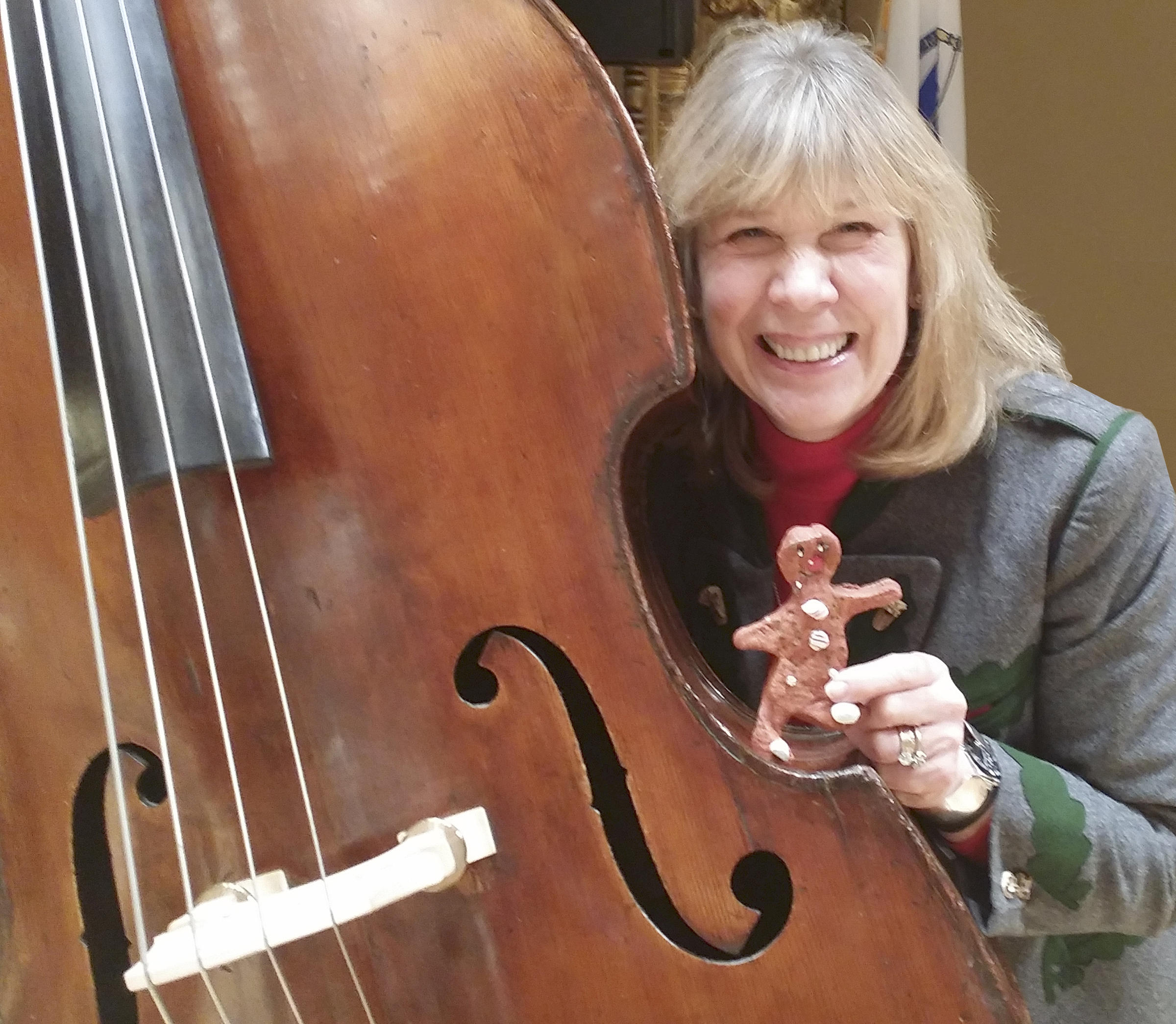
Jan Brett
CREDIT PENGUIN-RANDOM HOUSE
Brett's books often feature wildlife she enjoys having at her two-acre home in Norwell, Massachusetts. But she has a special love for chickens and raises exotic breeds that she sells and shows. Brett has about 60 chickens, including Silkies, Buff Brahmas, Cochins, Silver Phoenix, and Polish varieties.
“But my biggest inspiration is ..."


Wednesday, November 16, 2016

Between the Lines: A Life of Adventure

by Zinta Aistars

for WMUK 102.1 FM
Southwest Michigan's NPR affiliate


Between the Lines is my weekly radio show about books and writers with a Michigan connection. It airs every Tuesday at 7:50 a.m., 11:55 a.m., and 4:20 p.m. (or listen anytime online), on WMUK 102.1 FM, Southwest Michigan's NPR affiliate. I am the host of Between the Lines.

This week's guest: Kathleen Stocking


Kathleen Stocking has traveled the world, and dug deep into her own community in Michigan's Leelanau Peninsula for what she calls a "bone- deep" understanding of people. She's written about her discoveries along the way in a trilogy of memoirs. The latest is The Long Arc of the Universe: Travels Beyond the Pale (Stocking Press, 2016).

“My first book was about my peninsula, the Leelanau Peninsula,” Stocking says. “I was writing then for Detroit Monthly magazine, so a lot of that book was columns published by Detroit Monthly. Then I received several awards and did the next book about my state, Michigan, and a lot of islands, because I was always curious about the offshore islands. Then, with my children being grown, and being very curious about the rest of the world, I accepted a fellowship from the William James Foundation and worked in the prisons of California.”

Stocking says she wanted to understand why so many people in the United States are behind bars. Teaching creative writing inside the prison helped her do that. Stocking relates the stories of inmates, many doing time for murder and other violent crimes. She soon found that the inmates were like anyone else, anywhere. 
Kathleen Stocking in 1975
CREDIT KATHLEEN STOCKING
They broke down in tears speaking of their children and the other loved ones they had left behind. They longed for the simple pleasures of life: a good meal, a long walk in nature. Stocking says writing became the key for many inmates to open up what was locked up inside. Stocking’s stories about working with inmates open her new book of travels beyond her home territory.
“From there, curiosity took me to El Salvador, a couple tours in the Peace Corps, and traveling in between, coming back again and again to the Leelanau Peninsula,” she says. “I just wanted to understand the larger world. I was curious about ... "


Thursday, November 03, 2016

Between the Lines: Working Invisible

by Zinta Aistars

for WMUK 102.1 FM
Southwest Michigan's NPR affiliate


Between the Lines is my weekly radio show about books and writers with a Michigan connection. It airs every Tuesday at 7:50 a.m., 11:55 a.m., and 4:20 p.m. (or listen anytime online), on WMUK 102.1 FM, Southwest Michigan's NPR affiliate. I am the host of Between the Lines.

This week's guest: Dustin M. Hoffman

Dustin M. Hoffman
CREDIT CARRIE ANN HOFFMAN


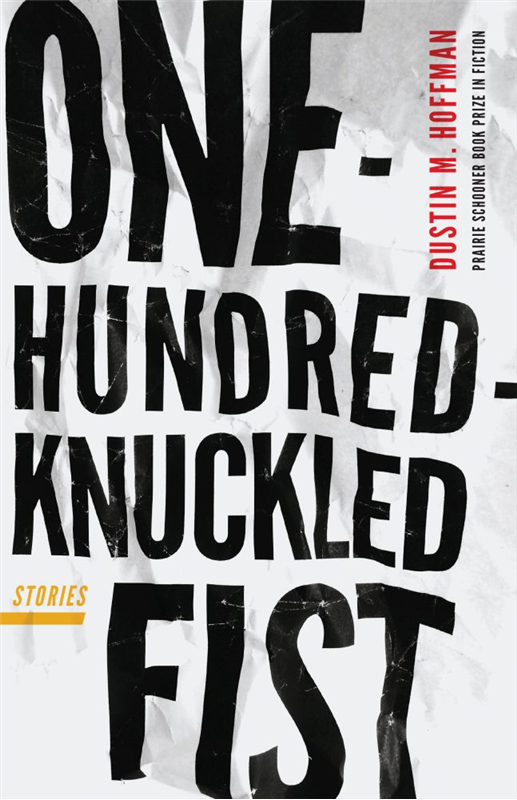
He may teach in academia now but for ten years, Dustin M. Hoffman painted houses in Michigan. Hoffman’s story collection, One-Hundred-Knuckled Fist (University of Nebraska Press, 2016) won the 2015 Prairie Schooner Prize for his gritty portrayal of painters, carpenters, roofers, firemen, ice-cream truck drivers, the homeless, and the retired. In short, for the invisible 99 percent. 

“We often come to fiction for escapism,” Hoffman says. “We want to see some kind of life that is more interesting than our own, maybe a little more opulent, or something surreal or fantastic. But I think this is a mistake with many new writers. Readers are actually very interested in this world. There can be escapism in the nine- to-five world as well.”

Hoffman tapped into his years working in construction and house- painting to develop the colorful working-class characters in his sixteen stories.
CREDIT UNIVERSITY OF NEBRASKA PRESS
“It was an interesting time to be working in construction,” Hoffman recalls. “I was doing it right up until 2007, so right up against the housing bubble and the recession. From 2004 to 2006, we couldn’t build houses fast enough. And then, a weird thing happened. Just as I was leaving, those houses went into foreclosure and whole subdivisions would have for sale signs up. And a lot of my friends lost their jobs.”
Hoffman says that experience, “tinged with a sense of guilt as we were building these irresponsible houses,” brought him to the world he wanted to write about. He was fascinated and haunted by the way that line of work burgeoned and then quickly vanished. Hoffman says it brought out vivid aspects of the personalities around him, the bonds between workers, and their intimate conversations. He says they remain invisible to the world because, if they do their work right, they fade into the background. The smooth drywall in a house, the perfect paint job, the expertly shingled roof, are all forgotten when they're done right.
And yet, invisible as that expert touch may be, Hoffman says ...